
A mother who asked for a ramp.
A BOOK BY JOE FIORE · YOUR GUY IN THE ORANGE TIE

A No-Nonsense Guide for Parents Navigating the Special Education Bureaucracy
Follow Maya and her mom through one school year of evaluations, meetings, progress reports, and disagreement, with the law explained along the way by someone who has sat in every seat at the table.



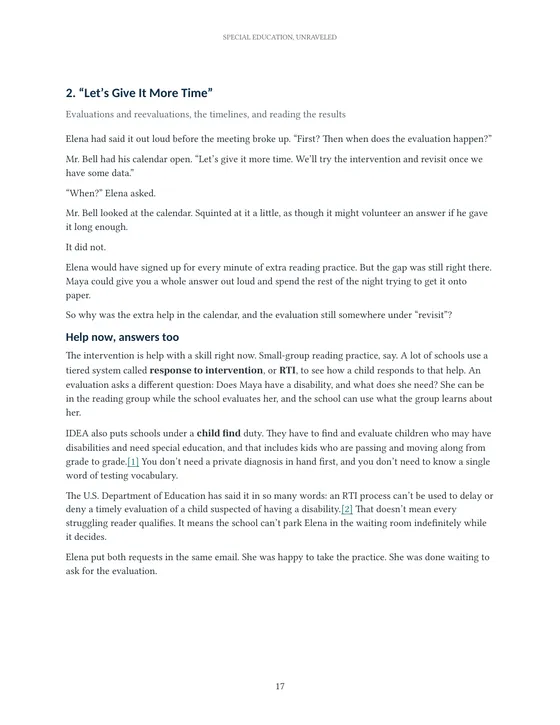


Somewhere around the fourth one, it’s fair to wonder whether anyone at the table is still talking about your kid. This book keeps the conversation on your child and puts the law right next to it.

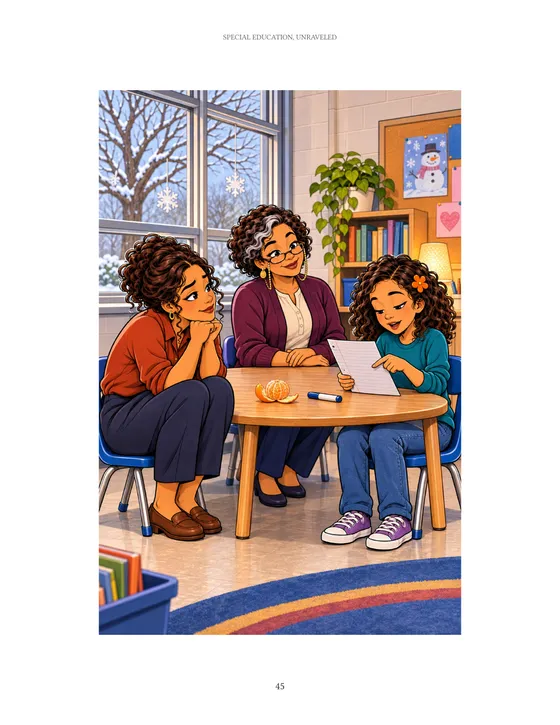
Maya can explain exactly how an octopus escapes from a jar. Writing a paragraph about it is another matter. When her mom asks the school for help, she starts learning what the law requires, and how easily a plan can look reassuring and still miss the point.
I explain what IDEA actually requires schools to do, where Section 504 fits, and why a finished IEP isn’t the same thing as an education that works. You’ll see how your child’s needs should connect to the teaching, the goals, and the placement. You’ll learn how to tell missed services from a program that isn’t producing progress, and what your options are when you disagree.
“SDI is about the teaching, not the room.”
Figure out which law you’re dealing with, and start with your child’s need instead of the form.
Know what to ask when waiting is the plan.
Follow one need from the evaluation all the way to the goal.
Find out whether the support helps your child learn or just helps them get through the day.
Compare how the same need gets met in each setting the team is considering.
Walk out with the actual decision, not just a feeling about how it went.
Put the plan next to what’s actually happening in school.
Find out what time your child lost, and why.
Name the problem and the fix, and know your options.
A mother who asked for a ramp.
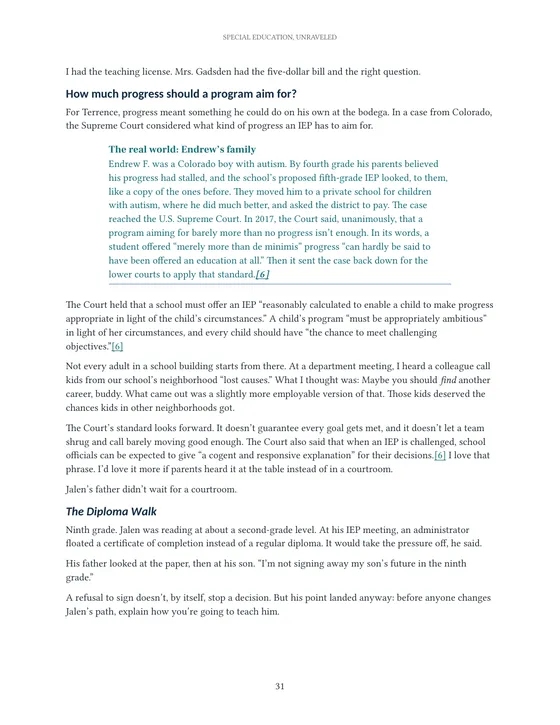
A father who wouldn’t sign away his son’s future in ninth grade.
A date stamp the district forgot it had put on a letter.

The stories, the drawings and the Orange Tie Tips are there so the law shows up in situations you’ll recognize.
You don’t need to carry every chapter into every meeting. Start with the question that matches what’s happening now.
| Your question | Go back to |
|---|---|
| Which law, and which kind of support, are we discussing? | Chapter 1 |
| What does the school need to investigate, and by when? | Chapter 2 |
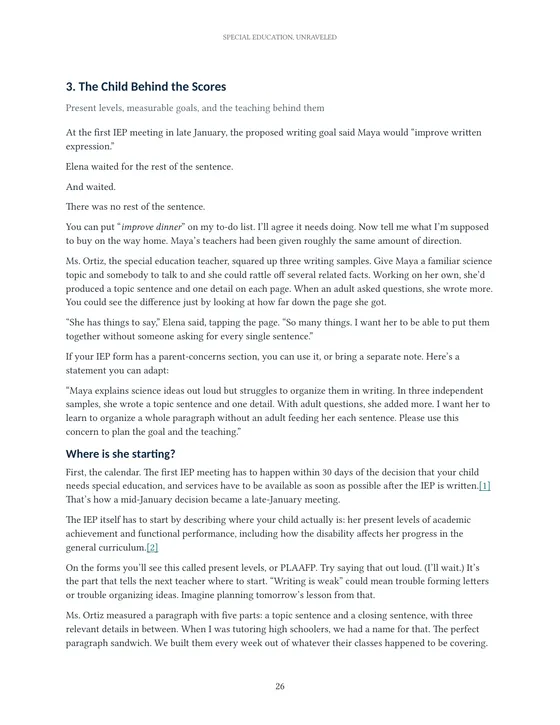
| How do this need, this goal, and this teaching connect? | Chapter 3 |
| Does this support change access or the learning goal? | Chapter 4 |
| How will this setting deliver the program? | Chapter 5 |
| What is being decided, and what supports it? | Chapter 6 |
| Did the service happen, and is my child learning? | Chapter 7 |
| What school time was lost, why, and which rules apply? | Chapter 8 |
| What is wrong, and which route could fix it? | Chapter 9 |
“You can appreciate a teacher and question a program.”

You’ll Get the IDEA.
Get the book
EPUB and PDF, illustrated
Buy the ebookFull color, 6 × 9 inches
Buy the paperbackFor Kindle and the Kindle app
Buy the Kindle edition